Thinking about trading sidewalks for sunrises and building the place you really want? Buying land in Midland gives you room to breathe, but it also asks you to slow down and check a few key boxes that house buyers rarely face. If you plan ahead, you can avoid the common surprises that stall deals and drive up costs.
In this guide, you’ll learn how to evaluate acreage in Midland step by step: zoning and access, wells and septic, utilities, permits, surveys, financing, timelines, and who to hire. You’ll also find links to the exact Cabarrus County resources you need to verify details. Let’s dive in.
Why Midland land appeals
Midland and the surrounding Cabarrus County plan area read as rural and agricultural with a mix of large-lot homes, small subdivisions, and farm or timber tracts. Pockets of light industrial uses sit along major corridors. The county’s Midland Area Land Use Plan notes that limited public water and sewer are a key constraint on higher density. That single fact shapes what you can build and how quickly you can build it.
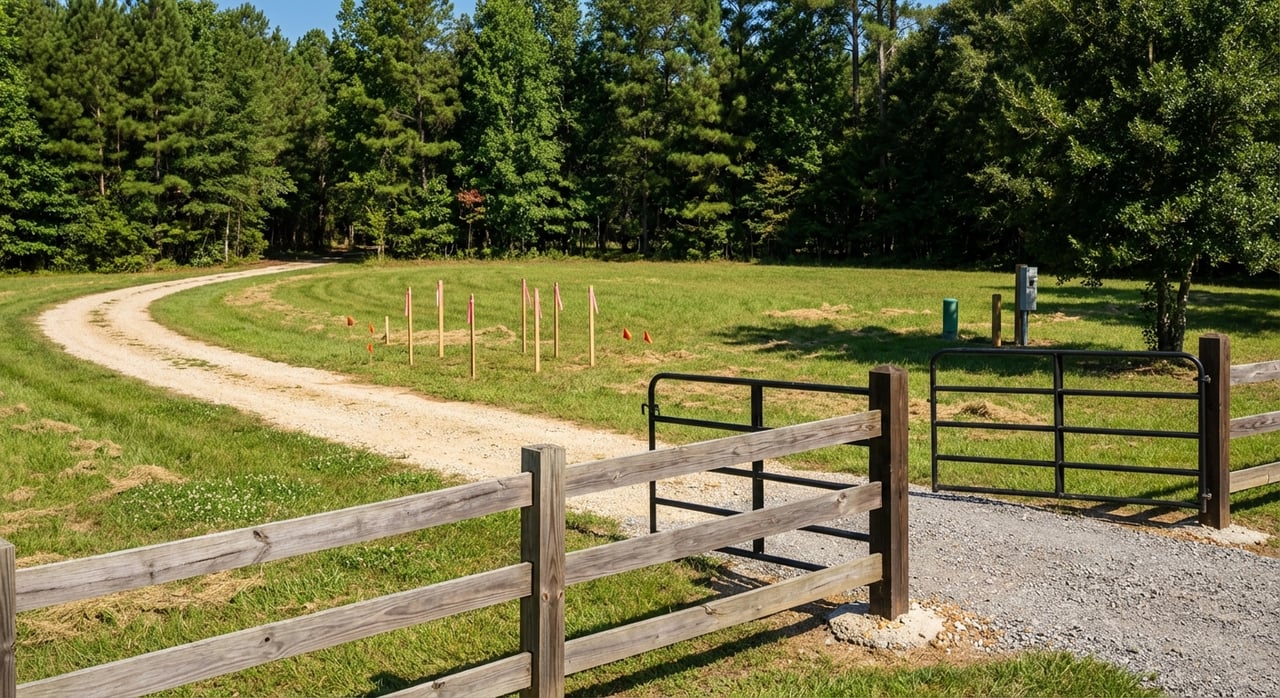
On the ground, “small acreage” ranges from under an acre up to several dozen. Expect a mix of cleared fields, wooded ridges, small streams, and occasional wetlands in low-lying spots. Those features affect where you can place a home, driveway, outbuildings, and septic.
Your practical due‑diligence checklist
Focus on these items early. They are the most common reasons buyers renegotiate or walk away.
Deeds, plats, and easements
Confirm what is recorded against the property before you fall in love with a plan. Review the deed, any covenants or restrictions, recorded plats, and all easements. Order a current title commitment and search the Cabarrus County Register of Deeds for restrictions and right‑of‑way documents.
Zoning and subdivision rules
Check the parcel’s zoning and any special or conditional uses. If you might divide the land, review the county’s subdivision guidance on minimum frontage, lot size, access, and stream or flood buffers. The Midland Area plan also highlights where rules or future changes may apply.
Utilities: water, sewer, power, internet
- Water and sewer. Much of Midland relies on private wells and septic systems. Public water or sewer can be a game changer for density and cost, but availability varies. Plan a formal site evaluation for septic and a separate well permit and water testing.
- Electricity. Confirm if power is at the road and the estimated cost to bring it to your build site. For deeper parcels, a new service drop and poles can add time and money.
- Internet. Expect wired service near developed corridors and a mix of fixed wireless, 5G home, or satellite options farther out. If fiber is important to you, verify by address.
Legal access and driveway permits
Make sure the parcel has deeded, insurable access to a public road. If you need to create access onto a state‑maintained road, the driveway will require a North Carolina Department of Transportation permit with rules for design, drainage, and sight distance. Start that process early. Private roads must meet county standards, which can affect width, base, and turnarounds.
Septic, wells, and soils
Soil conditions determine whether a conventional septic system will work or if you will need an engineered solution. Order a county site evaluation before you remove contingencies. For wells, expect a separate permit, setbacks, and water‑quality testing. The NRCS Web Soil Survey can give you a first look at soils, but the county’s on‑site review is what counts for permitting.
Floodplain, wetlands, and drainage
Use FEMA flood maps to confirm flood zone status. If the parcel touches a Special Flood Hazard Area or regulated riparian buffer, your buildable area may shrink and permit requirements will increase. Low‑lying or ponded areas can also signal wetlands, which may trigger added reviews.
Environmental red flags
If a parcel has industrial history, unknown fill, or sits near a recorded cleanup site, consider a Phase I Environmental Site Assessment. For properties with higher risk, a Phase II with sampling may be prudent before you commit.
How land deals differ from buying a house
Smart contingencies to include
Add contingencies that match your plan: boundary survey, successful septic site evaluation, well permit or adequate water yield, confirmation of legal access, and a driveway permit when needed. For higher‑risk properties, consider an environmental review. These steps can affect your schedule and closing.
Surveys and title questions
Vacant land often needs a new boundary survey. For commercial tracts or lender requirements, an ALTA/NSPS land‑title survey documents boundaries, easements, rights‑of‑way, and other items title insurers rely on. Ask your title company which level they will accept.
Permits that shape your build
Expect to handle a building permit, septic permit, and well permit at the county level. If your driveway ties into a state road, you will also need an NCDOT driveway permit. Floodplain or performance standards can add steps where applicable. Check setbacks, accessory buildings, and agriculture‑related allowances before you finalize a site plan.
Line‑item costs to budget
Set aside funds for a boundary or ALTA survey, soil evaluation, septic design and installation, private driveway and culvert, utility extension, clearing and grading, permit fees, and potential wetland or buffer compliance. Title and insurance costs can be higher on rural parcels with more recorded easements.
Financing land in Midland
Loan types and down payments
Land loans do not look like standard home mortgages. Raw land is harder to finance and often requires larger down payments and higher rates. Improved lots with road and utilities are easier. Typical down payment guidance ranges from about 15 to 50 percent depending on land type and lender.
Where to look for lenders
Local banks, credit unions, and Farm Credit associations are primary sources for rural and agricultural lending. If you plan farm use, ask about programs that support farm ownership or operating needs. Start lender conversations early so your contract timelines match underwriting reality.
The right local pros to hire
- Experienced land‑focused real estate agent.
- Licensed land surveyor for a boundary or ALTA/NSPS survey.
- Septic designer and licensed well driller, plus a civil or site engineer if grades, streams, or buffers are complex.
- Environmental consultant for parcels with industrial history or unknown fill.
- Title company and real‑estate attorney for easements, covenants, and closing.
- Planning or permitting consultant if you plan to subdivide or seek a special/conditional use.
A simple Midland land‑buying timeline
- Weeks 0 to 2: Pull deeds, plats, and easements. Check zoning. Start lender pre‑qualification.
- Weeks 1 to 4: Order county site evaluation for septic and confirm well requirements. Contact utilities for capacity or extension estimates. Start any required driveway permit conversations.
- Weeks 2 to 6: Order boundary or ALTA survey. Adjust based on terrain, acreage, and surveyor workload.
- Weeks 2 to 8+: Lender underwriting and title work. Permitting timelines vary. Engineered septic, wetland issues, or long utility runs add time.
Local resources and next steps
Use these sources to verify details for a specific parcel and to plan your next calls.
- Cabarrus County Planning and Zoning for zoning, subdivision, and floodplain guidance: Planning Department
- Area maps and policy context for Midland: Midland Area Land Use Plan
- Parcel lines and visible infrastructure: Map Cabarrus GIS Viewer
- County site evaluations for septic and well permitting steps: Environmental Health Site Evaluations
- Recorded deeds, plats, easements, and covenants: Cabarrus County Register of Deeds
- Driveway access to state roads and permit rules: NCDOT Driveway Policy
- Official flood zone status: FEMA Flood Map Service Center
- Soil mapping tool for early screening: NRCS Web Soil Survey
- Typical land loan requirements and down‑payment ranges: Bankrate land‑buying guide
Ready to take the next step or want a set of expert eyes on a specific parcel? As a Midland‑based boutique, we bring hands‑on guidance, a deep local network, and the calm, step‑by‑step support land deals require. Reach out to McCoy Real Estate, Inc. and let’s map your path from idea to acreage.
FAQs
What should I check first when buying acreage in Midland, NC?
- Start with recorded access, zoning, and any easements or covenants, then order a county site evaluation for septic and confirm well or public water options before you spend on surveys.
How do I know if a Midland parcel can support septic?
- Request a county soil and site evaluation to confirm suitability and system type; poor soils can require engineered systems or reduce where you can build on the lot.
Do I need a permit for a new driveway onto a state road in Cabarrus County?
- Yes. If your access connects to a state‑maintained road, an NCDOT driveway permit is required and reviews can take weeks, so start early.
How much down payment is typical for a land loan in North Carolina?
- Expect roughly 15 to 50 percent depending on whether the land is improved or raw and on the lender’s program; talk with local banks, credit unions, or Farm Credit early.
What kind of survey do I need for vacant land?
- Most buyers order a boundary survey. For commercial or lender‑driven deals, an ALTA/NSPS survey maps boundaries plus easements and other title matters in detail.
How long does it take to close on land in Midland?
- Plan for 30 to 60 days in straightforward cases; engineered septic, wetland reviews, long utility extensions, or survey complexity can push timelines longer.